
Paint by Numbers Explained: A Step-by-Step Beginner's Guide (2026)

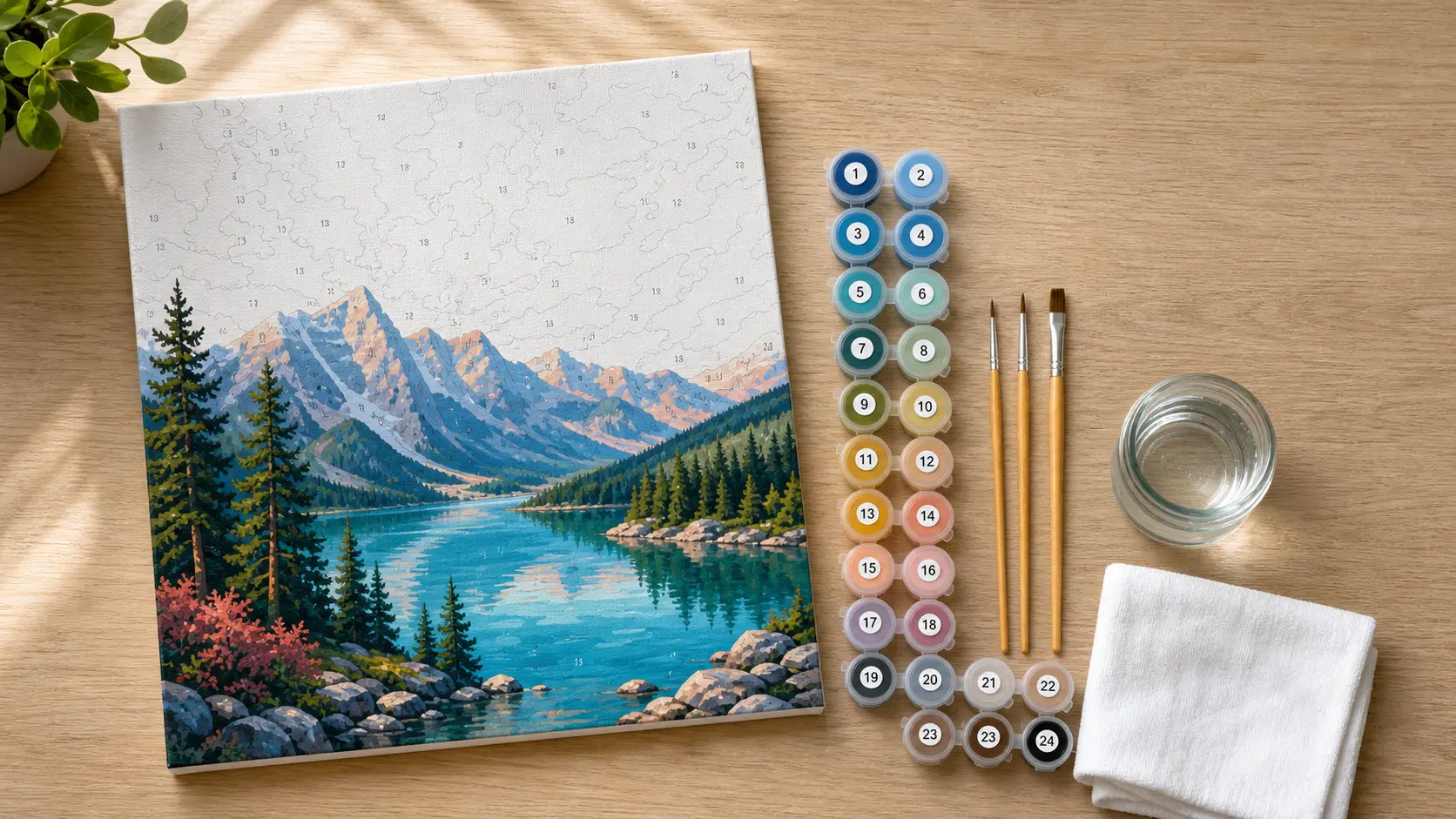
Paint by numbers is a painting system that splits an image into hundreds of numbered shapes, then gives you a pot of pre-mixed paint for every number. You match number to number and fill the shape in. No drawing, no colour theory, no mixing — and no art experience of any kind. Most beginners finish their first canvas in 8–20 hours and hang it on the wall.

Every shape on the canvas carries a number, and that number points to exactly one paint pot.
Quick answer: how paint by numbers works
- The concept: An image is digitally mapped into numbered regions by colour and tone. Each number equals one specific paint.
- Skill required: None. The kit has already made the two hardest decisions in painting for you — composition and colour matching.
- What's in the box: A pre-printed canvas, numbered acrylic paints, a set of brushes, and a reference picture of the finished piece.
- Time to finish: 8–20 hours for a standard canvas, usually spread over two to four weeks.
- Best beginner setup: A 40×50 cm canvas with a simpler palette, painted light colours first, two thin coats per section.
What is paint by numbers?
Paint by numbers is a guided painting method in which a photograph or artwork is broken into small outlined shapes, each labelled with a number that corresponds to a pre-mixed colour supplied in the kit. Fill in every numbered shape with its matching paint and the separate patches resolve into a complete, detailed painting — the same way individual tiles resolve into a mosaic when you step back.
The format has been around since the 1950s, but the modern version is far more sophisticated. Today's kits are generated with digital colour-mapping software, so shading, highlights and skin tones are handled with a level of subtlety the original mid-century kits never had. That is why paint by numbers for adults is now one of the most popular low-cost creative hobbies in the world, sitting alongside puzzles, embroidery and diamond painting as a screen-free way to switch off for an evening.
The reason it works is simple. A blank canvas asks you to solve three problems at once: what to draw, how to build the colours, and how to apply the paint. A numbered kit solves the first two for you and leaves you only the third — the part that is genuinely relaxing.
How paint by numbers works, step by step
1. The image is mapped
Software (with a designer reviewing the result on custom orders) analyses a photo and reduces it to a limited palette. Areas of similar colour and tone become distinct outlined regions.
2. Each region gets a number
Every region is assigned a number tied to one exact paint colour. Larger areas like sky or grass repeat the same few numbers; detailed areas like eyes or petals pack many numbers into a small space.
3. The canvas is printed
The outlines and numbers are printed in light grey on primed canvas, faint enough to be covered by two thin coats of acrylic.
4. You fill in the shapes
You paint region by region, matching the number on the canvas to the number on the pot. There is nothing to decide and nothing to mix.
5. The picture appears
Once the last regions are filled, the outlines disappear under the paint and the individual patches read as one continuous image.
What comes in a paint by numbers kit
The quality of the materials decides whether your finished piece looks frame-worthy or homemade. Here is what a complete kit includes and why each item matters.
| Component | Why it matters |
|---|---|
| Pre-printed canvas | Woven cotton-blend canvas has a slight texture, or "tooth," that grips the paint. Thin paper substitutes let paint bleed across the outlines and ruin crisp edges. |
| Numbered acrylic paints | Pre-mixed, non-toxic, water-based and ready straight from the pot. Acrylic dries fast, cleans up with water and covers opaquely in two coats. |
| Brush set | You need at least three sizes: a fine liner for tiny numbers, a medium round for mid-size shapes and a flat brush for skies and backgrounds. |
| Reference image | A printed copy of the finished artwork. Essential when you accidentally paint over a number and need to check what belonged there. |
| Optional: frame or hanging kit | Rolled canvases need stretching or framing; framed kits arrive ready to hang the moment the paint dries. |
Kits are commonly offered with roughly 24, 36 or 48 colours. Fewer colours means larger, simpler regions and a faster, more forgiving paint — the right choice for a first kit. More colours means finer shading and a more photographic result, but noticeably more hours at the table.
How to paint your first canvas: a 7-step beginner method
Step 1 — Set up a workspace you can leave out
Use a flat, stable surface with strong light. Daylight is best; a 5000K daylight lamp is the next best thing, because warm bulbs distort how the colours read. Keep a water jar, a paper towel and the reference image within reach. If you can leave the setup out between sessions, you will finish the kit — packing everything away each night is the single biggest reason kits get abandoned.
Step 2 — Flatten the canvas
Rolled canvases arrive with creases. Lay the canvas face down under a few heavy books overnight, or press it on the reverse with a warm (never hot) iron and a cloth between. A flat canvas is far easier to paint neatly.
Step 3 — Check your paint consistency
Open the first pot. Good acrylic should flow off the brush like double cream. If it has thickened in transit, stir in one drop of water at a time until it moves smoothly. Add water sparingly — over-thinned paint turns translucent and the printed numbers show through.
Step 4 — Choose a painting order
You have three sensible options:
- Light to dark — the safest for beginners. Darker, more opaque colours easily cover any overrun at the edges.
- Top to bottom — keeps your hand and sleeve off wet paint, especially useful for left-handed painters working right to left.
- Largest areas first — builds visible progress fast and keeps motivation high.
What you should avoid is painting strictly in numerical order, which scatters you across the canvas and forces constant brush rinsing.
Step 5 — Apply two thin coats, not one thick one
One heavy coat dries streaky and leaves ridges. Two thin coats give flat, even, professional-looking colour. Seeing the grey number through your first coat is completely normal — let the section dry for 15–20 minutes and go over it again.
Step 6 — Rinse and reshape the brush between colours
Pigment trapped in the bristles will muddy your next colour, and this is the most common reason a finished canvas looks dull. Rinse, blot on the towel and pull the bristles back to a point before you reload.
Step 7 — Seal and hang it
Let the finished canvas cure for 24 hours, then apply a matte or gloss acrylic varnish. Varnish deepens the colours, evens out the sheen difference between paints and protects the surface from dust and UV fading.
Beginner tip: the gap between an amateur-looking canvas and an impressive one is almost never talent. It is two thin coats instead of one, a properly rinsed brush, and not rushing the last 10%.
Five mistakes that ruin a first canvas (and the fix)
| Mistake | What happens | Fix |
|---|---|---|
| Leaving pots open | Acrylic skins over and dries solid | Open one pot at a time and close it the moment you switch |
| Over-thinning with water | Paint goes translucent, numbers show through | Add water one drop at a time; aim for a cream texture |
| One thick coat | Streaks, ridges and visible brush marks | Two thin coats, drying between them |
| Skipping the rinse | Colours turn muddy and grey across the whole piece | Rinse and blot at every colour change |
| Chasing perfect edges | Frustration and abandoned kits | Step back one metre — small overruns are invisible at viewing distance |
Can you turn your own photo into a paint by numbers kit?
Yes. The same mapping process works on any photograph you own, which is how custom paint by numbers kits are made. You upload an image, it is converted into a numbered canvas with a paint set matched to that specific photo, and it arrives ready to paint like any standard kit.
Popular subjects include pets, wedding and family portraits, houses, motorcycles and travel photos. At Paint by You you can start from a custom painting by numbers kit, a dedicated pet portrait kit, an own-photo personalised kit, or a simpler custom kit designed for kids.
How to pick a photo that converts well
- Bright, even lighting. Daylight beats flash. Harsh shadows across a face flatten into odd grey patches.
- High resolution. Send the original file, not a screenshot or a compressed social media download.
- Clear separation from the background. The subject should not blend into a similarly coloured backdrop.
- Few subjects, close in. One or two faces or one pet works far better than a group of eight at a distance.
- Go larger for portraits. Faces need space for detail — choose 40×50 cm or bigger for people and pets.
What size canvas should a beginner choose?
| Size | Typical time | Best for |
|---|---|---|
| 20×30 cm | 4–8 hours | Trying the hobby, children, simple graphic designs |
| 30×40 cm | 8–12 hours | First adult kit, single pets, landscapes |
| 40×50 cm | 12–20 hours | The sweet spot — detailed enough to frame, still finishable |
| 50×70 cm and up | 25–40+ hours | Statement wall pieces, group portraits, experienced painters |
If you are unsure, choose 40×50 cm. Smaller canvases squeeze detail into regions too tiny for a beginner's brush control, which is more frustrating than a slightly bigger project.
Why adults find paint by numbers relaxing
Painting a numbered canvas puts you into a repetitive, low-stakes task with immediate visible feedback — the same conditions that make knitting, gardening and jigsaw puzzles absorbing. Because the creative decisions are already made, there is no fear of a blank page and no way to "get it wrong," so attention settles on the movement of the brush instead. Painters routinely describe hour-long sessions passing unnoticed, and many use a kit deliberately as a screen-free wind-down before bed.
It is also one of the cheapest hobbies to try. A complete kit costs less than a couple of cinema tickets, includes every tool you need, and leaves you with a finished piece of wall art rather than something that goes in a drawer.
Frequently asked questions
Do I need any art experience to do paint by numbers?
No. Paint by numbers exists specifically to remove the need for experience. Composition and colour selection are already done, so the only skill involved is applying paint inside an outline — something most people can do well on their very first canvas.
How long does a paint by numbers kit take to complete?
A standard kit takes 8–20 hours depending on canvas size and the number of colours. Most people paint in one- to two-hour sessions a few times a week, which turns a kit into a relaxing two- to four-week project.
What kind of paint comes in the kit?
Pre-mixed, non-toxic, water-based acrylic. It is ready to use straight from the pot, dries in 15–20 minutes to the touch, cleans off brushes with plain water, and becomes water-resistant once fully cured.
Do I have to stay perfectly inside the lines?
No. Minor overruns disappear once neighbouring regions are filled, especially in busy designs like florals and landscapes. Precision to the millimetre is not what makes a canvas look good — even coverage is.
Why can I still see the numbers after painting?
Either the coat was too thin or the paint was over-diluted. Let it dry completely and apply a second thin coat; the grey print is designed to vanish under two layers of properly mixed acrylic.
Is paint by numbers only for kids?
No — the fastest-growing segment is adults. Adult kits use larger canvases, richer palettes and far more detailed designs than children's versions, which deliberately use big simple shapes and fewer colours.
What do I do if a paint pot dries out?
Add a few drops of water, seal the pot and leave it for a few hours, then stir thoroughly. Lightly skinned paint usually revives. If a pot is beyond saving, most sellers will send a replacement — or you can match the shade with a craft-store acrylic using the reference image.
Can I frame a paint by numbers canvas?
Yes. Let it cure for 24 hours, varnish it, then either stretch a rolled canvas over a wooden frame or drop it into a standard-size frame. Metric kit sizes such as 30×40 cm and 40×50 cm match off-the-shelf frames in most stores.
Ready to start your first canvas?
You now know exactly how paint by numbers works, what to expect in the box, and the handful of habits that separate a good finish from a messy one. The only thing left is choosing a design you actually want to look at on your wall — that is the real predictor of whether a kit gets finished.
Browse our top-rated kits or turn your own photo into a custom paint by numbers kit.